"Good improvisation communicates harmonic progression melodically. Effective melodies manipulate harmonic content through the use of guide tones and preparatory gravity notes, masterfully woven in systematic tension, release, and transparent harmonic definition."
July 2, 2015 | An object in motion?
Did you ever try to move the steering wheel on a parked car? Even when the column is unlocked it's a struggle to turn, and it's a simple matter of physics. When you're cruising on the highway at 60 mph you can turn with your fingertips, because an object in motion is easier to steer than one standing still. You can do this with a bowling ball, lawn mower, or shopping cart; the physics are the same in that with the injection of forward motion, turning is effectively easier.
This principle is also a metaphor for much we tackle in life, including improvising. So many musicians are intimidated by the notion of playing freely in front of others, following the "proper" theoretical rules. This can be a barrier to an incredible aesthetic experience, so we encourage you to put yourself in non-threatening ensemble environments and experiment boldly.
Just blow!
Solo. Of course you can play alone, and this is generally the first setp to exploring improvisation. However, it pales in comparison to the musical commune experience of sharing ideas, the proverbial iron sharpening iron, and it's always better to actually hear the harmonic construction of the music in real time.
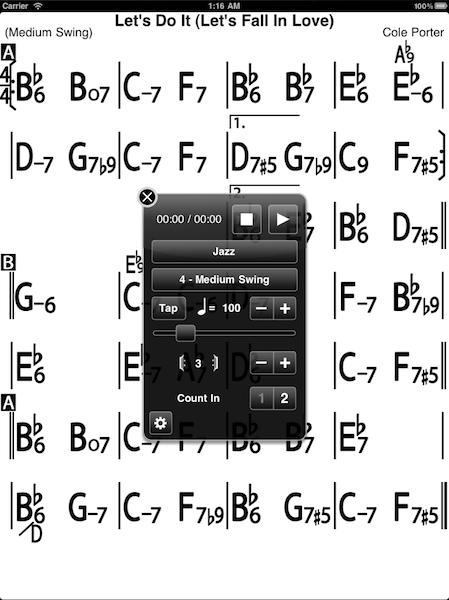
Jam Tracks. Technology is great and in the 70's we cranked up the turntables with our "Music Minus One" series in school band and the Aebersold LP records. Following the evolution of technology, we played along with background tapes and CDs, and lately the MP3 format has opened a whole new convenient world of accompaniment resources. Even MIDI based interactive software like Band in a Box or our personal favorite app for iPad & Droid (also Mac OS) iReal Pro with their additional alternatives in tempos and key changes at the tap of a screen can offer a whole new level of pedagogical experience.
An object in motion...
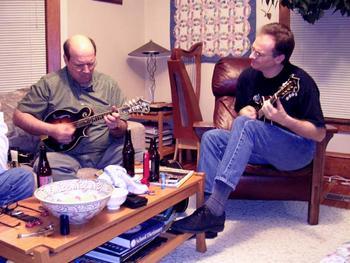
Jam with a Buddy. Learning with someone of your own ability offers you both the benefit of interactivity without the intimidation of a glaring audience. It's something you share and grow together.
Jam with a Mentor. One musician said he has a rule of selecting to only play with musicians better than himself. It might be a tad unrealistic (especially if they are on the same quest--they won't play with you), but take advantage of those rare moments you can hang with a pro.
The point is you can't learn to ride a bike until you get on the bike. Fracks and clams won't hurt you as badly as gravity, so make yourself vulnerable, and put yourself in one of the above situations to maximize your improvisation skill.
Most of the JazzMando readership is familiar with how the intervals of the Major Scale can be transformed into modes simply by starting the scale and ending it on a different note. You have the Dorian mode by starting on the 2nd note, the Mixolydian by starting on the 5th, and so on. This is arguably counter-intuitive though. Ultimately you want to be able to think of these modes as their own entity. We prefer to conceptualize them as a Major Scale with a note or two altered, the Dorian is a lowered 3rd and 7th, the Mixolydian is the lowered 7th, etc. Ultimately, you need to think these in the way that fits you best.
We're particularly fond of the Lydian Scale, because of the quirky color it puts into a Major Scale. The raised 4th removes the tension resolution of natural 4th to 3rd, and the half-step relationship to the 5th of the scale lends a peculiar sort of temporary, unsettling horizontal resolution to the dominant tone. That's the intellectual way of approaching it, or you can just say you like the sound.
Of course, there's also that disrespectful Tritone that doesn't do its harmonic duty and resolve to a 3rd or 6th like it does in a V7 chord.
You think of the Major 7th chord and how it became its own sort of consonance in 70's pop music. The Carpenters come to mind, especially that multi-track homogeneity of layered brother and sister background vocals, sometimes adding a Major 9th to the mix. You can "evolve" that sound up by adding the raised 11th, which of course is the raised 4th you need to get the Lydian Scale.
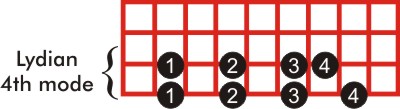
It's fun to just add this to your harmonic vocabulary when you have extended solo opportunities on a Major 7 chord. If you play around with it long enough, it just kind of settles into your ear. It's easy to find, too. In relation to the tonic, it's always one string up-one fret up, or one string down-one fret down, kind of like the way a bishop piece moves visually in a game of chess.
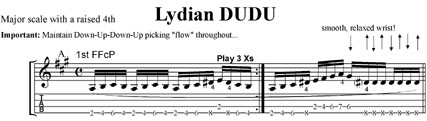
Of course you can play it out as a scale, and we have a great exercise to help get this into your fingers, our LydianDUDU drill designed to work on your Right Hand/Left Hand coordination:
Harmonically, you can play this out by fingering a Major 7th chord based on the 5th degree of the scale. In the key of C, you'd play a G Maj7 over the C. This would give you the F# you need for the raised 4th, and of course spell out a G Maj7 #11.
One of the songs in our "Getting Into Jazz Mandolin" book is based on the Lydian Scale. For a little fun, print out the song and listen to what New England Jazz Mandolinist Will Patton did with the song:
Query: So just what IS the difference in sound between an F hole and an Oval hole mandolin?
Tonal characteristics aren't easy to pigeonhole (no pun intended) into text, but let's attempt a visual of this...
Place your index finger about three inches from your mouth. Pucker your mouth as if to say "FOOH," blow very fast and hard on your finger. Contemplate the sensation a moment.
Now do the same, except open your mouth to say "FAHH" blowing very slowly, as if to warm your finger.
Again compare this sensation to the first time. Repeat both these and not the difference in feel on you finger pad.
Cold air verses warm air--this is a good metaphor for comparing if not the sound, the effect of the air. Like the "F" hole, sound is forced out quickly, its projection and focus many feet from the player. (Often the player hears an entirely different tone character than audience.) The sound of the Oval hole washes out over the player, and is far more "personal," more intimate, but more prone to being buried in an ensemble situation.
Which is better? If you've burned your finger on the toaster, you're certainly going to blow fast air on it, but if you've come in from a chilly walk on a February Nebraska morning, you'll aim for slow warm air. It's not an issue of one being better than the other, it's a matter of context.
Question: Which should I own, an "F" or an "Oval" hole mandolin? Answer: Both...
June 11, 2015 | Will Patton on the nuances of good tone.
In our April 2007 issue of MandolinSessions, we interviewed several prominent mandolin professionals about effective tone. Will Patton, Vermont-based jazz mandolin wizard described an important focus in his own playing, "letting a phrase 'breathe' naturally."
"A musical phrase should be like human speech, with inflections, rising and falling. Each phrase has a natural arc to it, let the intensity rise to the emotional high point and then fall off. Singers do it all the time, it makes the music come alive. Singing along with a phrase can sometimes unlock the natural contours."
Without the stability and certainty of solid individual notes, it doesn't matter what you do with the pick, you'll never successfully convey a line. Will confesses the mandolin can have a somewhat limited dynamic range, "Even though the mandolin has a limited range of volume, there's no reason not to take advantage of it. You can only play so loud, but you can really play soft! This technique is greatly aided by a receptive audience, a good sound system, and band mates who are tuned in to what's going on.
There are some lovely techniques for playing soft, including a very gently vibrato played where the neck joins the body. (David) Grisman uses this to great advantage at times. Not unlike a teacher quieting a room by speaking more SOFTLY, it can be very dramatic to have the band come to a whisper in a passage of music." With a well-fretted note, you also have a variety of places on the fretboard to produce a range of sounds.
Patton adds, "Sometimes my students and I will experiment with how many ways we can play ONE NOTE - say a nice Eb on the A string... it can be plucked down near the tailpiece for a bright soft tone with lots of overtones, or played hard and quickly (bluegrass style!) a little further up the body, or the pick can be brought thru the string, almost like you're aiming for a spot about 5 inches below the string, right over the sound hole (assuming an oval hole), which yields a rich full tone, or played up the neck a bit, bringing some other overtones into the sonic mix. This is the pick hand, the left (or fretting) hand can be static, or doing a slow back & forth vibrato (like a classical violinist) - or giving it some of that rock guitar edge with an up and down tremolo, adding a little 'bite' or sting to the note."
Read what other artists had to say, including Paul Glasse, Michael Lampert, Evan Marshall, Mike Marshall, Emory Lester, Scott Tichenor, Jamie Masefield, John Reischman, Don Stiernberg, and David Grisman.
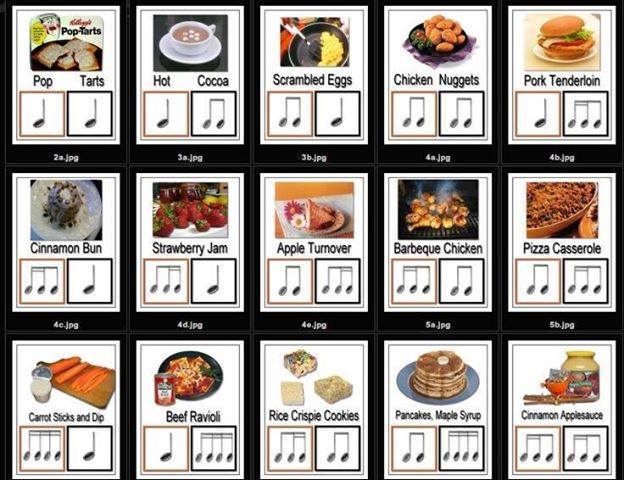
When you learn standard notation, you start out cutting notes into divisions and subdivisions. Any one out there have an elementary music teacher cutting out diagrams of pies? Once you get the concept of quarter note, half note, sixteenth, etc., you start to splice them together in combinations. Eventually, you start absorbing them in chunks of recognizable patterns, and our friends at Classical Chops have a delicious way of digesting them through pronunciation of the name of foodes.
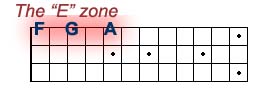
For some players, depending on the way their hands and wrists are built, or simply through developing bad habits early on, the first five or six frets of the E string can sound weak or pinched. The discussion will be very relevant to you if you've played literature on other areas of the fretboard and suddenly, you lose tone when playing anywhere from the first fret "F" to 5th fret A on your E string.
If you've ever fiddled on "Devil's Dream" in the key of A, "Sailor's Hornpipe" in G, or (speaking of devilish) "Blackberry Blossom" in G, this may resonate with you. Some players will transpose Blackberry up a third to B just to give a little better finger flexibility in narrower frets. This may be because of the shorter fret span, but it might also be due to the "angle" issue we'll discuss.
Holding the Left Hand "normally" (whatever that means), your fingers need to be able cross span comfortably from 1st string (E) to 4th string (G), meaning your fingers are generally perpendicular to the neck. This is very comfortable for the lowest strings, but most will find the E string (maybe A, too) a bit cramped, and that means trouble in two areas.
1. Finger pad coverage. Notice you play with more fingertip and less pad with the drastic curve necessary for effective string contact. Less flesh often results in a pinched sound.
2. Finger grip. A perpendicular wrist angle thwarts the maximum control and flexibility the fingers require to not only cover with any degree of strength, but to move in and out of position (see "Ulnar Deviation" below).
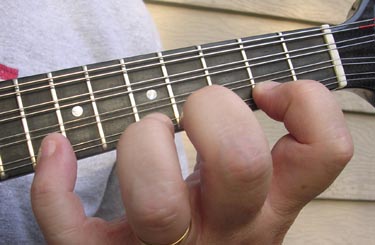
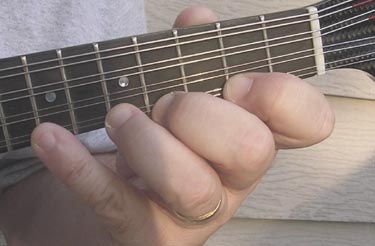
The solution here is quite simple. By curving your hand slightly toward the body of the instrument, adjusting your fingers to angle closer to parallel to the strings, you not only get more finger pad, the wrist will loosen up significantly.
Put your mandolin down and hold out your hand, palm straight up and wiggle your fingers in "air mandolin" motion, tapping your palms with your 3rd and 4th finger. Now, do the same only curve your hand slightly toward the floor. Notice how much less tension there is in your forearms. Also notice your fingers can actually reach farther.
Take this concept of wrist angle, and add "slant" to your fingers as pictured. As you tap on the fingerboard, enjoy the added dexterity this position offers in this string area.
Hmm... Flexibility, control, tone, relaxed. What could be wrong with this? Essentially, there is a point of diminishing returns in that this is not as effective for your lower strings (G & D). You'll want to discover for yourself what the best angle is for you fingers and hand size.
The point is to free your fingers up and relax the wrist. You may be quite surprised at what this does for your tone, especially in the "E-zone."
A Fiddler's Perspective. Interestingly, this issue is compounded in violin, which unlike mandolin, is held with the fingerboard is parallel to the ground (not perpendicular). Nissa de la Torre, professional violinist and educator tells us, "you do not want, what is called, "ulnar deviation" Simply put, the pinky-side of the arm (where the Ulna is) should be more or less a straight line from the arm through the hand. The movement of the wrist back-and-forth or left to right is a negative movement when repeating. (Up and down is good!) The placement of the left finger as we are discussing causes this Ulnar Deviation." She tells us many beginning violinists suffer from this, and the habit seems to stick until the opportunity to player in the upper positions of the violin and/or adding vibrato to their playing.
Five years ago, jazz mandolin royalty Don Stiernberg offered some pearls of wisdom in the Mandolin Cafe resource pages in a personal interview. One of the questions asked had to do with rooted voicings vs. rootless on the mandolin, and what contexts would determine the choice between the two. For example, how "modern" did he want his jazz playing to sound?
Don Stiernberg:
Of course the bluegrass or Bill Monroe voicings have roots in them, sometimes two! And that's how that style should sound, as you know. The repeated notes and lack of color tones yield a more percussive sound that the ensemble needs. Once in awhile I'll sneak in a rootless chord, a sixth chord like G6 fingered 4-2-5. Other modern bluegrass players do this too, I notice, mostly as punctuation at the end of a phrase.
In jazz playing the root chord can be expressed as a Maj6, Maj7, or just plain major. I'll avoid roots there too, since that's what the bass or guitar or piano might play, and the additional color tones (6, 9, 13, etc.) fit the style and "widen out" the sound of the band. Looking at the common denominator progression, ii7-V7-I, I usually play the minor chord straight, with a root, maybe adding a ninth if anything. So if the chart says Am7, I just play Am! Not sure why, I just hear the cadences better that way I guess. Similarly, the dominant chord usually contains a root too, but I'll freely add tensions or color tones. So D7 would have the D in it, but perhaps be replaced by a b9 or #9, or have a #5 or b5 or 13 added.
Now the "tough" question! Certainly the aspiration is to be as modern as possible, in terms of being able to improvise and have something to say in any harmonic situation or groove. The reality though is, I've got my hands full trying to cope with major and minor ii-V-Is, connecting chords, and a few very basic chord substitutions. Some of my improvisational heroes seem to be able to play cool melodies, inside or outside, over ANY type of progression. I'm thinking now of George Benson, Mike Stern, Toots Thielemans. I'd like to have that type of vocabulary and flexibility, but... hey, I'd like to play for the Cubs too!
Also, this question could be answered various ways depending on what constitutes "modern." Certainly some of the things Bix Beiderbecke or Louis Armstrong did in the '20s are as modern as anything that came since. Wes Montgomery's concepts were modern, many unique to him, others assimilation of Parker or Coltrane ideas. But as fresh as his work sounds, he unfortunately left us in 1968. Is that modern? Thinking that way, I seem to be drawn most to jazz styles up to about the 1950's I guess--Swing, Bebop, and the like. The modal things, Coltrane changes, and post modern things don't come as naturally to me, but again, I'd like to become more conversant in all the concepts and have them at the ready. I really like playing tunes with lots of changes and trying to make connected melody lines: standards, Bop heads, Latin things, even pop tunes from my time. But the concepts for improv that I apply to these were probably all worked out by Charlie Parker time in the late 1940s.
Enjoy the popular archive material below. From September 16, 2010 | Pick propulsion
Last week we looked at the "strike," the articulation point of attack where pick meets string. It's an important concept to understand, but it's only a part of the picture. The next issue in good mandolin tone is timing, coordinating the left and right hand to get the maximum amount of sustain through a succession of repeated notes.
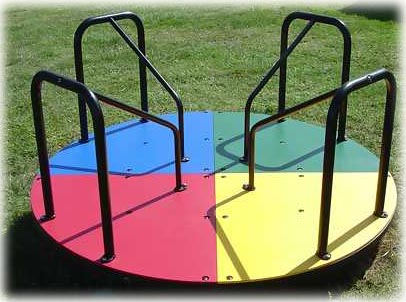
The metaphor of a playground merry-go-round is our picture in a fourth dimensional look at picking. We've used it before where you imagine pushing a child round and round, keeping the speed constant. Once you get it going, any variation in your push can cause the speed to falter. Hold your grip too long, you slow it down. Don't push in sync, and you interfere with the smoothness of the turn.
The "stop and start" impact is not unlike bad pick technique. Unfortunately, the professional Bluegrass realm is full of examples of this kind of "motorboat" effect, the propeller-like sound of pick and string at high tempos, and that "thup-pa thup-pa thup-pa thup-pa" sound is arguably unpleasant even at pyrotechnical speed. The start of a pick should never drastically impact the end of the next note, and in show-off soloing, you hear this once in awhile. Good picking is about starting the sound, not stopping it.
Effective pick control starts at slow tempos, and progresses in players only when developing the ability to intentionally drive the tone one note through to the next. We introduced an exercise to help you hear this in our Lydian DUDU drill from the Getting Into Jazz Mandolin book. The goal is to be able to play it when moving fret to fret, as well as crossing strings. The single note repetition at the end of the 2nd measure gives you the opportunity to setle into a well-timed swing of the pick.
May 7, 2015 | Mandolin Set-up E-Book by Rob Meldrum
The whole DIY (Do it Yourself) mode is not something we wholeheartedly embrace. Leaving things into the hands of the trained professional is not necessarily lazy, and it more often yields better results. That said, there's still something to understanding how things work, so you can assure they can continue to work. You may not be one to change the oil in your car, but knowing the basics of what the components of the engine are, what oil does for them and why frequent changes are critical can be the difference of years in the life of an automobile.
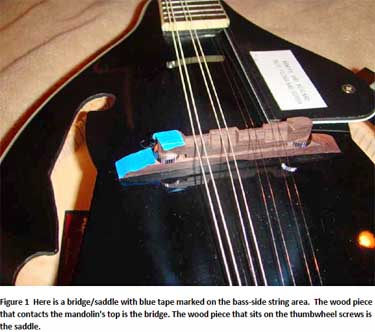
We feel the same about the mandolin. Never one to tinker, it still is a good investment in the upkeep and optimum performance to know what it is that makes a bridge intonate properly, what causes fret buzz, what an adjustable truss rod can do to address seasonal changes, what tweaks can (and can't) be made with an adjustable bridge, and a myriad of tiny tricks with pencil lead, vaseline, and painters tape.
Several years ago, Pacific Northwest based Robert Meldrum started to document his own personal journey in understanding these basics of mandolin set-up, and it paid off for him in playing enjoyment, let alone shop set-up charges, although the hobbyist is the first to admit the hands-on approach can be the preferred option for those who'd rather not tinker. He's created an ebook that he's given freely to the mandolin world, and we've had a chance to look through it and glean some keen insights.
Again, the book doesn't replace a good repair tech. He's posted a couple YouTube videos that demonstrate an extreme--taking a $50 import and making it somewhat playable. Frankly, there's not a lot of risk in that level of quality, but with some attention you can often get an okay starter.
The book is available in PDF format (electronic) by contacting him directly. Send an email to rob.meldrum at gmail dot com (use proper format, not bot protected) with "mandolin setup" in the subject line and he will mail the link.
April 30, 2015 | Use neuroscience to impact your playing?
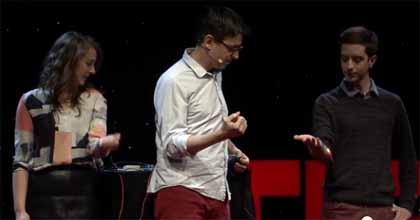
Greg Gage is on a mission to make brain science accessible to all. In this fun, kind of creepy demo, the neuroscientist and TED Senior Fellow uses a simple, inexpensive DIY kit to take away the free will of an audience member.
Disclaimer: In the 'Information Age' of the 21st Century,
any fool with a computer, a modem, and an idea can
become a self-professed 'expert." This site does not
come equipped with 'discernment.'
















 July 2, 2015 | An object in motion?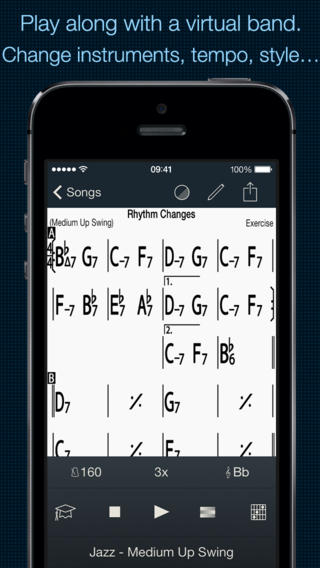
 LydianDUDU
 "Lydia O'Lydia" Will Patton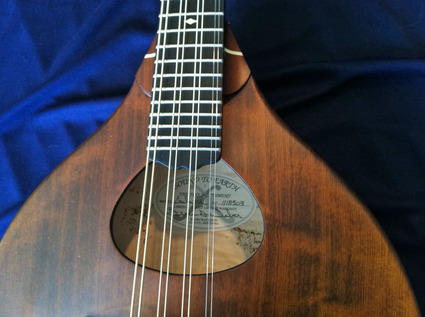

 Subscribe to this feed
